The mainstream view in 2026 is not that AI is cheap or that risk is absent. It is that the present cycle is structurally different from 1999 in five specific ways, and each carries weight.
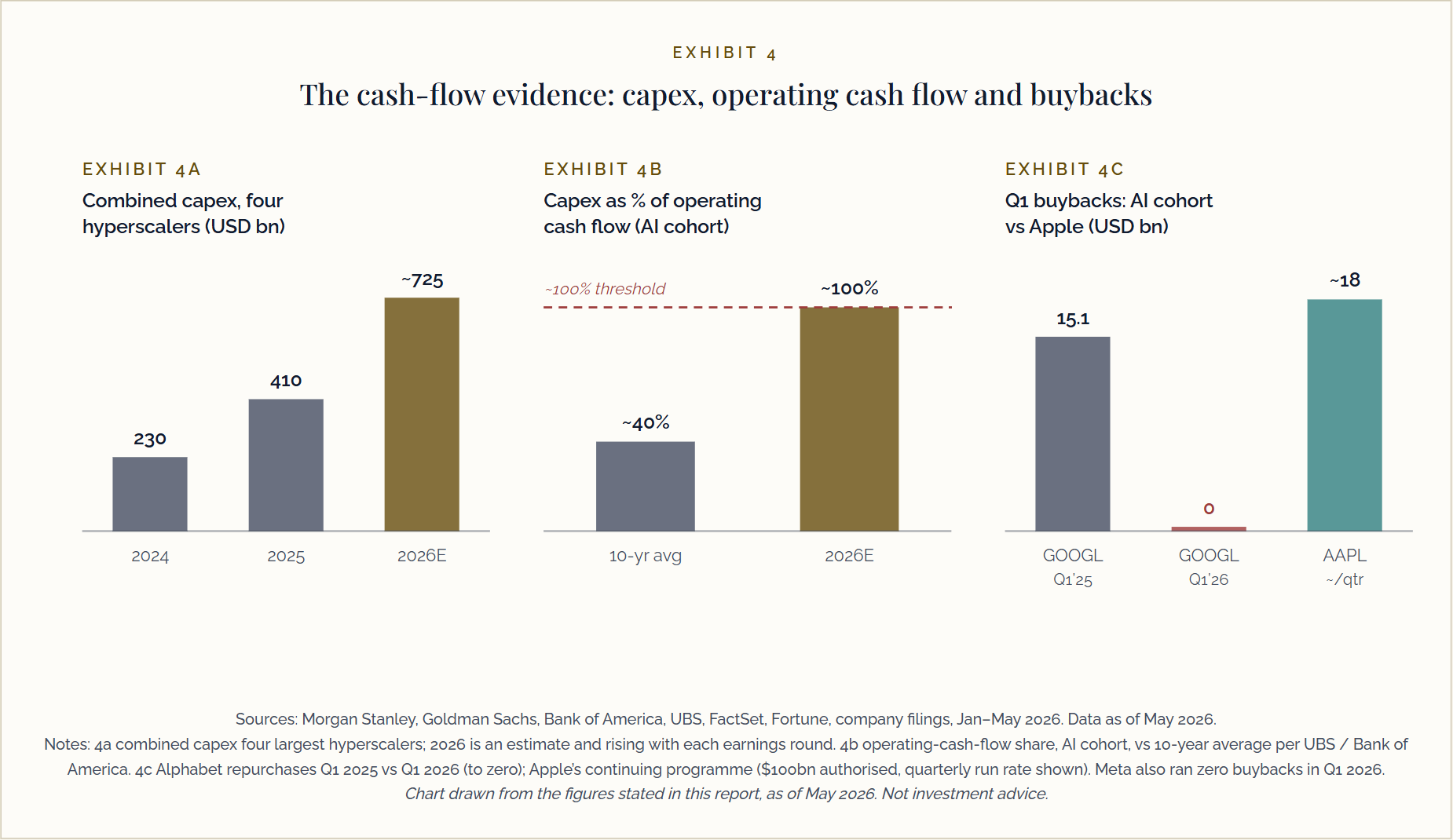
One, profitable incumbents, not speculative startups. The 2026 capex is being funded by Microsoft, Alphabet, Amazon, and Meta. Trillion-dollar businesses with operating cash flows that would have been unimaginable to a 1999 carrier. The buildout is internally financed off a foundation of recurring software and advertising revenue, not from junk-rated bonds underwritten by hopeful equity holders.
Two, prior capex is visibly converting to revenue. Q1 2026 earnings showed cloud margins expanding, Meta and Google advertising re-accelerating to multi-year highs, AWS at 28 percent year-over-year growth, Microsoft’s contracted backlog up 99 percent. The argument is that the 2023–2024 cohort of AI spend is already in the P&L, and the 2025–2026 cohort will follow.
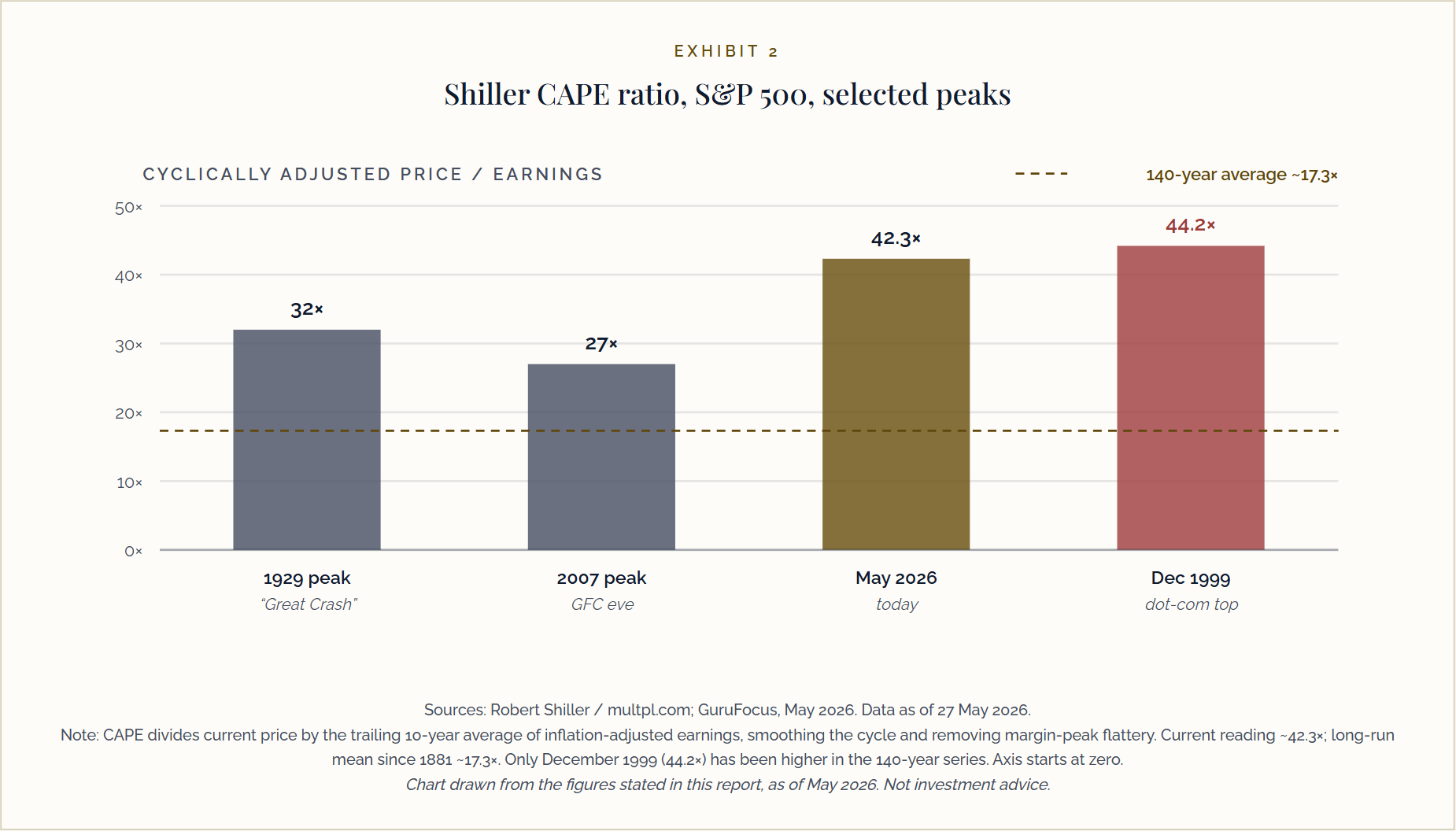
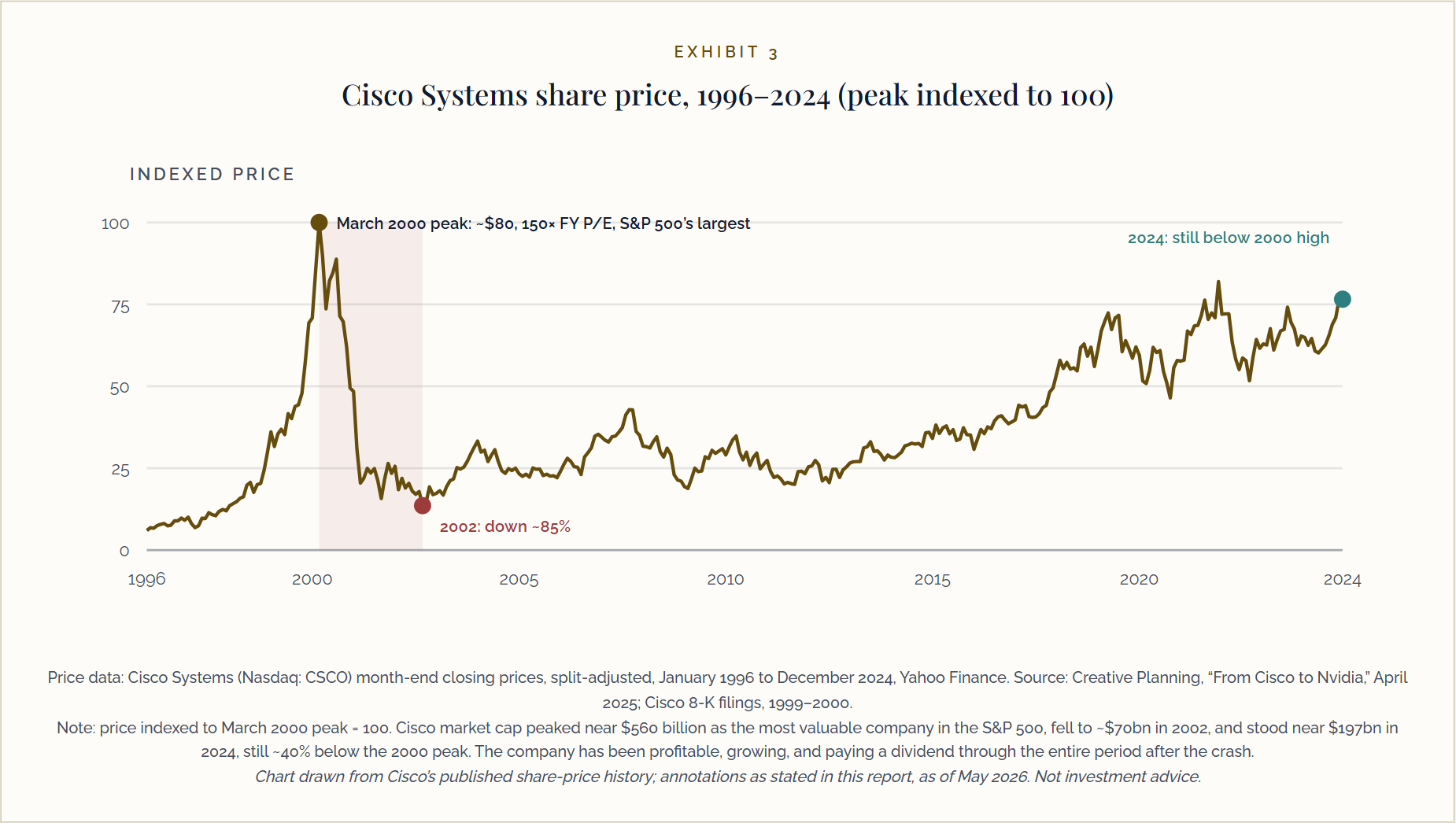
Three, valuation, while elevated, is not 1999. Today’s forward P/E on the S&P 500 sits at roughly 21×, expensive but a long way from the 28× trailing multiple of late 1999. The Magnificent Seven trade at 30 to 35× forward earnings on average; Cisco at the March 2000 peak traded above 150×. By the headline-multiple measure, today is not 1999.
Four, demand is here, not in 2010. The fiber laid in the late 1990s was about a decade ahead of its profitable end-market. ChatGPT has 900 million weekly users today. Enterprise AI deployments are live and billing. The use cases are not speculative; they exist.
Five, the financing is internal, not vendor-extended to fragile counterparties. Cisco, Lucent, and Nortel lent billions to CLECs and long-haul carriers that could not have paid cash. Today’s hyperscalers are paying Nvidia in cash. The closed-loop financing risk that characterized 1999 is, on this view, structurally absent.